
When the roots are cut, do not be surprised if the tree falls.
Let me speak to you not as a preacher or an expert on a high horse, but as someone deeply unsettled by what is unfolding. What is happening to the Aravalli Hills is not merely an environmental concern. It is a quiet dismantling of a system that has protected us for longer than human memory.
Once you truly see it, you cannot look away.
First Things First. What Even Are the Aravallis?
Let us ground ourselves in facts.
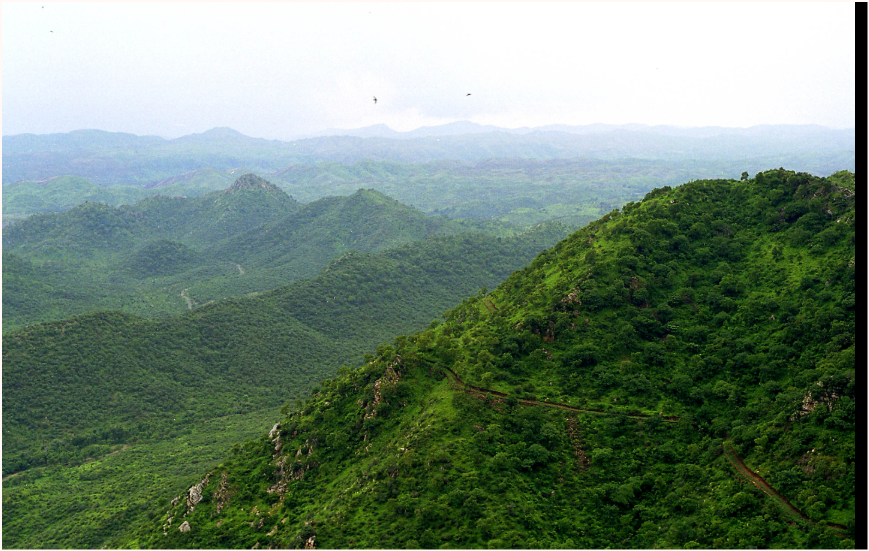
The Aravallis are nearly two billion years old. They are the oldest fold mountains on Earth, stretching almost six hundred and ninety two kilometres from Delhi, across Haryana and Rajasthan, all the way to Gujarat.
They are not dramatic peaks. They are worn, ancient, and unassuming. And that is exactly why we forget how much we depend on them.
Why they matter to you
For Delhi NCR, the Aravallis slow dust storms from the Thar Desert, filter polluted air, and recharge groundwater in a region already running dry.
For Rajasthan, Haryana, and Gujarat, these hills are water vaults. Rivers like the Chambal, Sabarmati, and Luni draw strength from this range. Rainwater seeps into fractured rock, quietly refilling aquifers that keep farms and cities alive.
For the rest of the country, the Aravalli’s stand between fertile land and desert expansion. Without them, desertification does not announce itself. It creeps in.
So What Went Wrong. The Decision That Redrew Nature
On November 20, 2025, the Supreme Court of India accepted a revised definition. Only hills taller than one hundred metres would now qualify as Aravalli Hills.
On paper, it looks technical. On the ground, it is devastating.
The reality beneath the ruling
More than ninety percent of the Aravalli range instantly lost legal protection.
In Rajasthan alone, out of twelve thousand and eighty one mapped hills, just one thousand and forty eight remain protected. The rest were effectively erased from the map, at least in legal terms.
Nature, however, does not disappear because paperwork changes.
What Follows When Protection Is Removed
The newly unprotected hills sit atop valuable minerals. Limestone, marble, granite, copper, and zinc lie beneath their surface.
Once protection vanishes, exploitation follows. It always does.
This is already playing out
In Haryana’s Bhiwani and Charkhi Dadri districts, ancient hills have been carved away. Stone crushers have turned geological history into fine dust.
Between nineteen seventy five and twenty nineteen, forest cover in the central Aravallis dropped by over thirty two percent. Dust storms intensified. Water tables sank. Health problems multiplied.
As activist Kailash Mina observed, villagers are left with bare hills, rubble, dust, and disease.
And the Thar Desert continues its slow advance.
Former Rajasthan Chief Minister Ashok Gehlot warned that history will not forgive us for bringing the desert to Delhi’s doorstep. That warning feels less like rhetoric and more like a timeline.
Voices Are Rising. Whether They Will Be Heard Is the Question
Across northern and western India, citizens have stepped onto the streets.
In December 2025, protests erupted in Gurugram, Udaipur, Jodhpur, Sikar, Alwar, and Delhi. Banners carried a simple message. No Aravalli, no life.
Civil groups such as People for Aravallis, Aravalli Bachao, and Youth4Aravallis continue to file petitions, organise rallies, and educate communities. Several political leaders voiced concern. Sonia Gandhi called the ruling almost a death warrant for the hills.
Still, mining activity presses forward quietly, away from headlines.
When profits whisper, ecosystems are expected to disappear politely.
Let Us Call This What It Is. A Risk We Cannot Afford
We are not lacking information. We are lacking urgency.
We are exchanging clean air for extraction.
We are exchanging water security for short term revenue.
We are exchanging climate stability for convenience.
The Aravallis endured ice ages and continental shifts. What they may not endure is calculated neglect.
We speak of sustainability while dismantling one of our strongest natural defenses against climate change. The contradiction is stark.
Where Does That Leave Us
This moment is not just about hills. It is about choice.
The mining ban of two thousand nine showed that citizen pressure can work. Change is possible when voices do not fade.
So here is the question that lingers.
When the dust settles years from now, and the desert has either been stopped or allowed to advance, where will you say you stood.
Were the Aravallis just a distant landscape you scrolled past.
Or were they something you decided were worth protecting.
That answer is still being written.